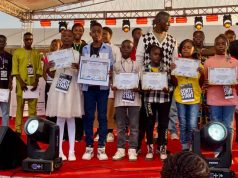
In the serene environment of the National Institute for Policy and Strategic Studies (NIPSS) in Kuru, Jos, stakeholders from four Nigerian states gathered for a transformative Learning and Adaptation Workshop under the PARSULP (Promoting Agro-Pastoralism, Reconciliation, and Resilience for Sustainable Livelihood and Peace) project.
The workshop, organized by Global Peace Development (GPD) and supported by TetraTech, SPRING, ActionAid Nigeria, and FCDO, brought together government representatives, community leaders, youth advocates, and peacebuilding practitioners from Benue, Plateau, Kaduna, and Katsina states. The gathering served as the second in a series of learning sessions designed to reflect on project progress, share experiences, and adapt strategies for sustainable peace.
Faith Prince, GPD’s Director of Programs, opened the workshop with a comprehensive welcome that framed the day’s objectives and underscored the organization’s commitment to sustainable peace.
“Good morning, distinguished participants, community representatives, government stakeholders, and partners,” Prince began. “On behalf of the Management and Board of Global Peace Development, I warmly welcome you to this learning and adaptation workshop under the Promoting Agro-Pastoralism, Reconciliation, and Resilience for Sustainable Livelihood and Peace project, being implemented across Benue, Plateau, Kaduna, and Katsina States.”
Prince articulated the project’s core mission: “This project seeks to strengthen reconciliation processes, build resilience, promote social cohesion, and support sustainable livelihoods in conflict-affected communities.”
She highlighted GPD’s organizational ethos, explaining that “Global Peace Development is guided by its vision of a society where sustainable peace drives development for all, and our mission is to build a peaceful society through gender equality, social justice, democracy, and good governance.” She noted that in pursuit of this mandate, GPD works across five of Nigeria’s six geopolitical zones, partnering with communities, government institutions, and development partners to address conflict and promote inclusive development.
Emphasizing the importance of adaptive learning, Prince explained that “a key feature of this project is the integration of state-level learning and adaptation workshops. These sessions are intentional spaces for reflecting on implementation experiences, assessing evolving conflict dynamics, and adjusting strategies to ensure our interventions remain responsive and effective.”
Referencing the project’s learning journey, she noted that “the first learning and adaptation session was held in Kaduna, where valuable insights emerged around dialogue processes, community engagement, and early response mechanisms. We are gathered here today for the second learning session to deepen reflection, validate emerging lessons, and agree on practical adaptations that will strengthen implementation across the four project states.”
Prince concluded by creating an inclusive atmosphere: “This workshop provides a safe and constructive space for shared learning where successes will be discussed, challenges highlighted, and collective solutions developed. We value your experiences and encourage your active participation throughout today’s discussions. Once again, thank you for your commitment to sustainable peace, resilience, and inclusive livelihoods. I wish us all a productive and impactful workshop.”
The PARSULP project addresses one of Nigeria’s most persistent security challenges: farmer-herder conflicts. Operating in Soba LGA (Kaduna), Daura LGA (Katsina), Riyom LGA (Plateau), and Boroko LGA (Benue), the eight-month initiative targets 4,410 direct beneficiaries and reaches over 19 million people indirectly through media outreach and community engagement.

Chat Sunday Adamu, GPD’s Programs Manager, outlined the root causes the project addresses: competition over land and water resources, distrust between communities and security agencies, unresolved grievances, weak institutions, and unregulated pastoral movements.
The results have been remarkable. In Riyom’s Jong and Twin Wards, communities that hadn’t sat together since 2016 are now in dialogue. According to local testimonies, areas that once experienced annual bloodshed during the December period have seen unprecedented calm.
Perhaps most striking was the example of 26 poisoned cows an incident that ordinarily would have sparked violent retaliation. Instead, thanks to the deliberate reconciliation efforts facilitated by GPD, the communities maintained peace and resolved the matter through dialogue.

Ebruke Onajite Esike, Executive Director of GPD, emphasized the project’s holistic approach: “We are working with three pillars: agro-pastoral support to help farmers and herders get the resources they need; agroforestry, which includes planting trees, shrubs, crops, and pastures that benefit both groups; and policy engagement with relevant ministries to find permanent solutions.”
The workshop gave voice to those directly impacted by the peacebuilding efforts.

Aminu Gambo from Katsina State shared his emotional journey: “I didn’t think I would even become a member of this group, but now I am. We meet farmers, we sit together, we hold dialogues so that we can understand each other better and build peace that way.”

Ibrahim Galma, representing Benue State’s pastoral community, highlighted the trust deficit that fuels violence: “There is a trust deficit, especially between crop farmers, who are majorly Christians, and livestock herders, who are mostly Muslims. This often triggers violence, ethnic tension, and sometimes even religious misunderstandings.” He added, “Your neighbor should be your first security, not the police or soldiers.”

Safiya Auwal from Kaduna State spoke about the workshop’s practical impact: “When we go back, we will organize step-down trainings. We will hold meetings that will equip other women with peacebuilding skills so they can become peace ambassadors in their communities.”

The workshop’s design encouraged cross-state learning through breakout sessions where participants, grouped by state, discussed activities, challenges, and proposed solutions. Group presentations and plenary sessions allowed representatives to share insights and receive feedback from peers facing similar challenges.

The emphasis throughout was on community-driven solutions and adaptable strategies rather than one-size-fits-all approaches. As Executive Director Esike noted, “I don’t have all the answers. The answers will come from all of us working together.”
Global Peace Development’s vision of “a society where sustainable peace drives development for all” guided the proceedings. The organization’s commitment to gender equality, social justice, democracy, and good governance provided the framework for discussions on creating lasting change.
The workshop concluded with participants equipped not just with knowledge, but with actionable pathways for practice change concrete steps they could implement in their respective communities to advance reconciliation between farmers and herders.
As the participants departed, they carried with them renewed hope and practical tools for peacebuilding. In regions where conflict has disrupted lives and livelihoods for years, this cross-state collaboration represents a significant step toward the sustainable peace and inclusive development that communities desperately need.
The success stories emerging from Riyom, the commitments made in Jos, and the networks formed across state lines suggest that while challenges remain, the culture of peace and tolerance is taking root one dialogue, one community, one relationship at a time.