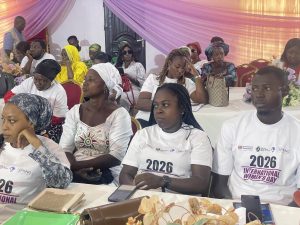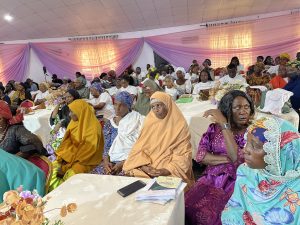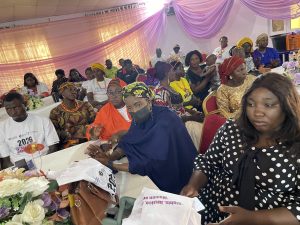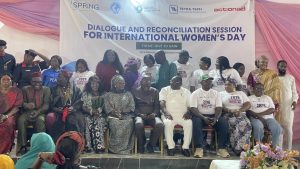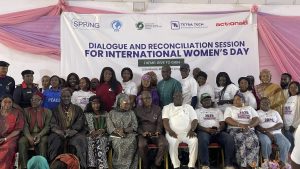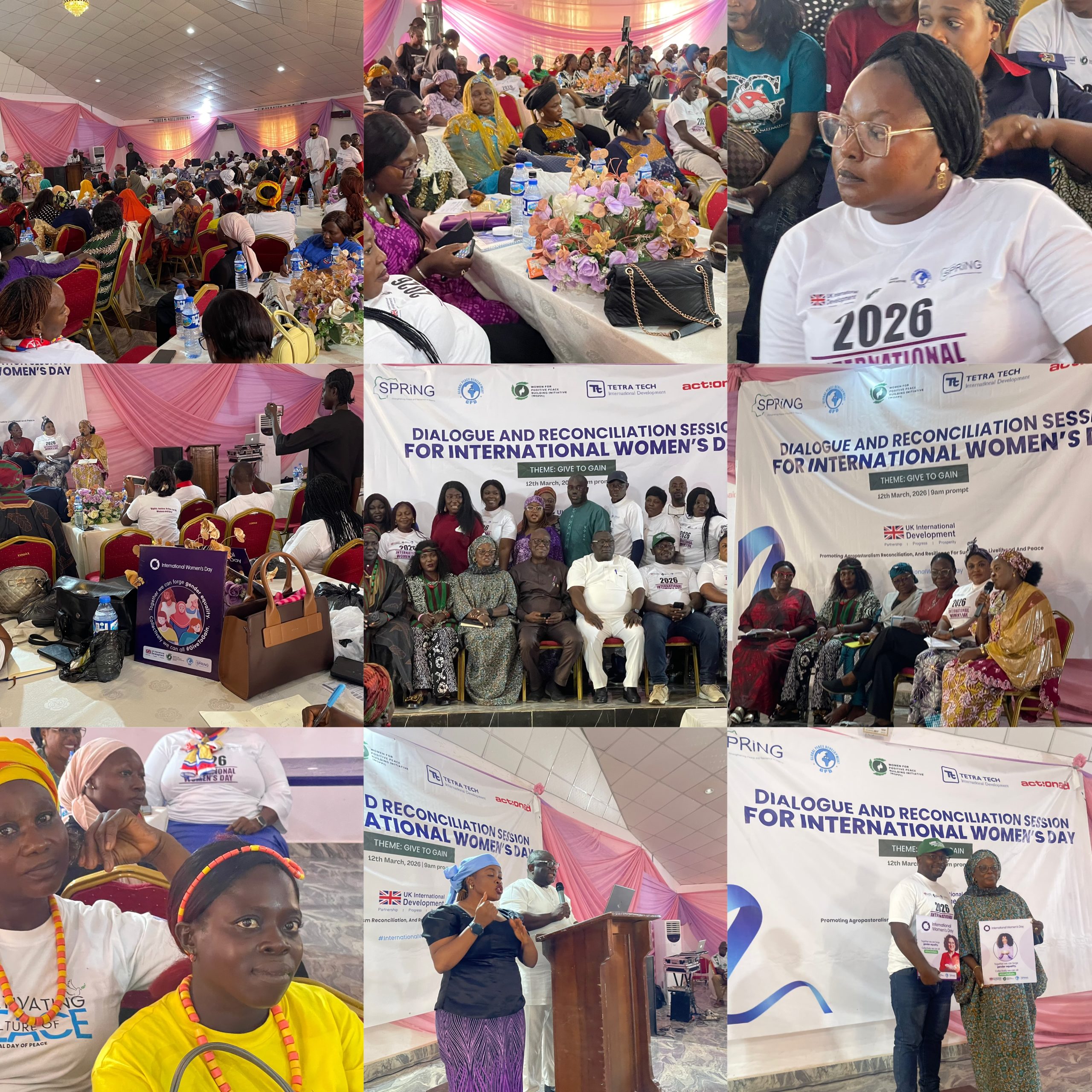
Stakeholders, women leaders, and community representatives gathered on March 12, 2026, for a Dialogue and Reconciliation Session to commemorate International Women’s Day. The event, organized by Global Peace Development (GPD), brought together voices from government, civil society, and traditional institutions to discuss the role of women in building peaceful and resilient communities.
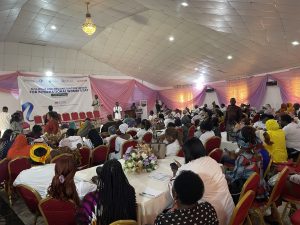
The session focused on strengthening women’s capacity for leadership, reconciliation, and community development while encouraging greater access to opportunities that empower women socially, politically, and economically.
Delivering the welcome address, GPD Program Manager Chat Sunday Adamu emphasized the importance of creating spaces where women can discuss issues affecting their lives and communities while working toward sustainable peace.
Several goodwill messages were delivered by representatives of government institutions and civil society groups, all highlighting the need for stronger collaboration in advancing women’s rights and opportunities.
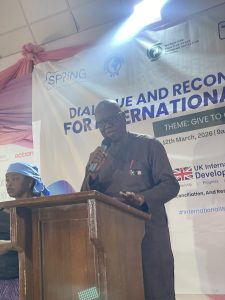
Representing the Commissioner for Women Affairs, Sunday Dombin noted that initiatives supporting women must remain a priority.
“Anything that promotes and uplifts women is something we strongly support,” he said, while encouraging women to actively participate in governance and leadership.
He also pointed out that despite progress, women remain underrepresented in political spaces, including the State House of Assembly, urging both men and women to support greater female participation in politics.
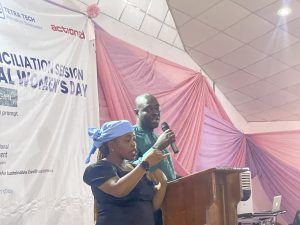
The keynote address was delivered by Mujidang Sittang, Regional Program Manager for the Strengthening Peace and Resilience in Nigeria (SPRING) project.
He described International Women’s Day as an opportunity to amplify the voices of women and recognize the sacrifices they have made for their families and communities.
According to him, the theme “Give to Gain” reflects the idea that when society provides women with opportunities, the benefits extend far beyond individuals to families, communities, and nations.
He emphasized that the SPRING program works across several states to strengthen women’s capacity, promote their rights, support micro-economic development, and ensure that girls remain in school.
Sittang also highlighted the importance of collaboration with government institutions and community stakeholders in addressing emerging social issues such as drug abuse and youth vulnerability.
“Women have always been giving to their families, communities, and society. It is time for society to give back by creating opportunities for them to lead and thrive,” he said.
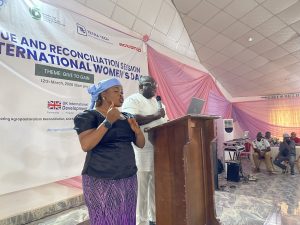
A major highlight of the event was the paper presentation titled “Strengthening Women’s Capacity for Stronger Families and a Peaceful Society Through Access to Give and Gain Pathways,” delivered by Ebruke Onajite Esike, Executive Director of Global Peace Development.
Esike explained that empowering women is not only a matter of fairness but also a strategic step toward achieving peace and sustainable development.
He noted that women possess the capacity to promote peace, protect rights, and strengthen families but often face barriers such as cultural practices and lack of financial independence.
The presentation encouraged women to pursue education at any stage of life and to support each other in leadership and decision-making processes.
“Education has no age limit,” he said. “When women are educated and empowered, they strengthen families and help build peaceful societies.”
The event also featured two panel discussions moderated by development practitioners and peace advocates.
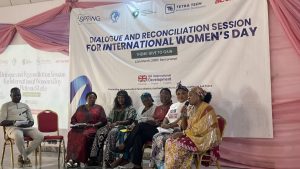
The first panel, moderated by Bright Habila Istifanus, focused on “Giving Access to Women for Structured Reconciliation, Resilience, and Peace in Communities.”
Panelists included:
- Amb. Rhoda Istifanus Sadus
- Amb. Bridget Dakyes
- Amina Aminu
- Nene Dong
The discussion explored how women can play stronger roles in peacebuilding, mediation, and community reconciliation.
The second panel, moderated by Philomia (GPD), examined “Gains for Women Empowerment on Rights, Justice, Stronger Families, Productive Workforce, and a Peaceful Society.”
Panelists included:
- Chat Adamu
- Sunday Dombin
- Caroline Bishop
- Wika Gofwan
Contributors highlighted the importance of legal protection for women, economic empowerment, and the need for stronger policy support to ensure women’s inclusion in leadership and development initiatives.
During interviews at the event, several participants shared their perspectives on women’s empowerment.
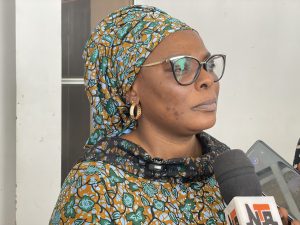
Ambassador Mercy Dung Silas encouraged women to actively engage in politics and decision-making processes, noting that many women hesitate due to societal barriers and male-dominated political structures.
She stressed the importance of women supporting one another and working collectively to achieve greater representation.

Dung John Hwyere, Program Officer with the Women for Positive Peacebuilding Initiative, highlighted emerging social challenges affecting young girls, including trafficking and exploitation.
He noted that trafficking networks continue to adapt their methods, emphasizing the need for stronger collaboration among government agencies, civil society groups, and community leaders to protect vulnerable girls.

Similarly, Pukun Uko, Chief Legal Officer with the National Human Rights Commission, reaffirmed that women’s rights are human rights and called for greater investment in education, mentorship, and empowerment programs for women and girls.
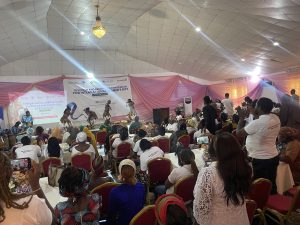
There was a cultural performance and closing remarks, participants were reminded that the conversations held during the dialogue must extend beyond the conference hall.
The Dialogue and Reconciliation Session served as a reminder that empowering women is essential for building stronger families, resilient communities, and lasting peace.
With continued collaboration among government institutions, civil society organizations, and community leaders, stakeholders expressed hope that the voices of women will increasingly shape decisions that affect their communities and the future of society.