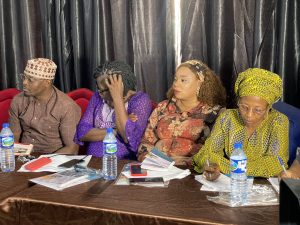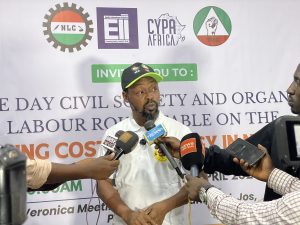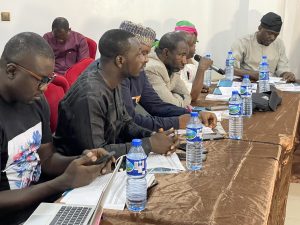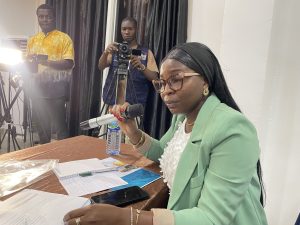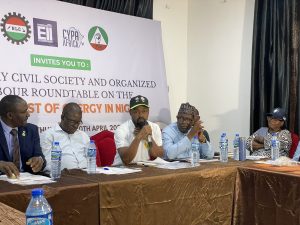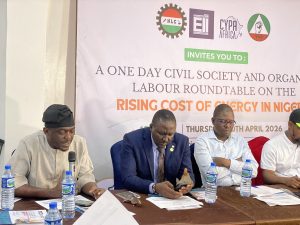
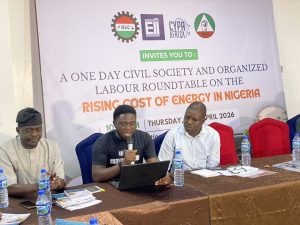
On Thursday, April 30, 2026, stakeholders from civil society and organized labour gathered at Crispan Hotel for a high-level roundtable focused on one of Nigeria’s most pressing challenges the rising cost of energy.
Themed “Stabilizing Energy Prices in Nigeria: Coordinated Pathways to Affordability and Economic Resilience,” the dialogue brought together thought leaders, labour representatives, policy advocates, and development experts to examine the root causes of Nigeria’s energy crisis and propose practical solutions.

In his opening remarks, Amb. Chris Iyama emphasized that the rising cost of energy is no longer sustainable for the average Nigerian. He noted that despite global fluctuations in oil prices, domestic fuel costs remain persistently high due to foreign exchange volatility, weak refining capacity, and distribution inefficiencies.
“Today, most Nigerians find that their take-home pay can no longer take them home,” he stated, highlighting the growing disconnect between income levels and living costs.
He further stressed that temporary palliative measures cannot solve structural problems, insisting that “bags of rice cannot fix Nigeria’s energy crisis.”
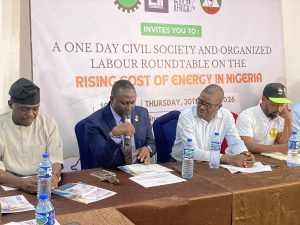
Providing a broader outlook, James Ugochukwu compared Nigeria’s fuel prices with those across West Africa, noting that while prices are high regionally, Nigeria’s situation is unique given its status as an oil-producing nation.
He raised critical concerns about price instability and questioned why countries with fewer resources sometimes enjoy more stable pricing systems.
According to him, the issue goes beyond pump prices to include cost-of-living pressures, policy inconsistencies, and lack of effective domestic refining.
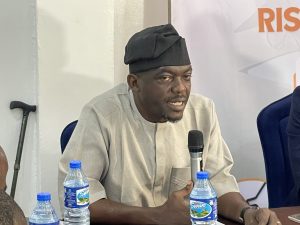
Delivering a context-setting presentation, Gad Shamaki described Nigeria’s energy crisis as not just an economic issue, but a governance and social justice challenge.
He pointed out the paradox of an oil-rich nation where citizens struggle to afford fuel, stressing that rising energy costs have a ripple effect on food prices, transportation, education, and small businesses.
“Energy costs are driving inflation and reducing purchasing power,” he said, adding that small businesses are among the hardest hit.
He also called for improved public transportation systems, investment in alternative energy sources like solar, and stronger accountability in governance.
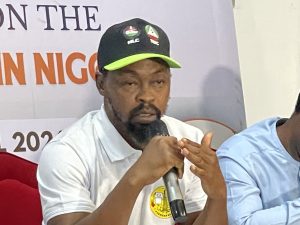
From the labour standpoint, Kenneth Shamah highlighted the lack of political will as a major barrier to reform in Nigeria’s energy sector.
He advocated for the adoption of the NLNG model in managing refineries where private sector efficiency is combined with government oversight to ensure sustainability and accountability.
He also emphasized the need for tax relief, better regulation, and policies that support local production, noting that a weak currency inevitably fuels inflation.

The interactive session, moderated by stakeholders including Steve Aluko, explored several critical concerns:
- Persistent high fuel prices despite global reductions
- Foreign exchange pressures and dollar-linked pricing
- Non-functional refineries and slow progress on modular refining
- Inefficient supply chains and overreliance on road transport
- Weak regulatory oversight and transparency gaps
- The economic burden on workers and vulnerable populations
Participants agreed that Nigeria’s energy challenges are deeply structural and require coordinated, multi-sectoral solutions.
At the end of the session, stakeholders issued a communiqué outlining key recommendations:
- Strengthen transparency and accountability in the energy sector
- Revive existing refineries and support modular refinery development
- Ensure a portion of refined products is reserved for domestic use
- Stabilize the naira and address foreign exchange challenges
- Invest in public transportation and social protection systems
- Provide tax relief for businesses affected by rising energy costs
- Revive pipeline and depot systems to improve distribution efficiency
- Promote long-term, people-centered energy policies
Participants also emphasized that energy should not be treated solely as a market commodity, but as a critical component of national development and social welfare.
With the dialogue held just a day before May Day, the timing underscored the urgency of addressing the economic realities facing Nigerian workers.
Speakers noted that while subsidy removal was intended to liberalize the market, it has not been matched with adequate social support systems, leaving citizens to bear the brunt of rising costs.
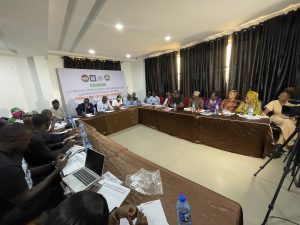
The roundtable concluded with a collective commitment by civil society and organized labour to sustain advocacy, deepen engagement with policymakers, and push for actionable reforms.
Stakeholders described the situation as an “energy emergency,” calling for immediate and long-term measures to restore affordability, improve infrastructure, and rebuild public trust.
As discussions continue beyond Jos, the message from the roundtable is clear
Nigeria’s energy crisis requires not just dialogue, but decisive, transparent, and people-centered action.