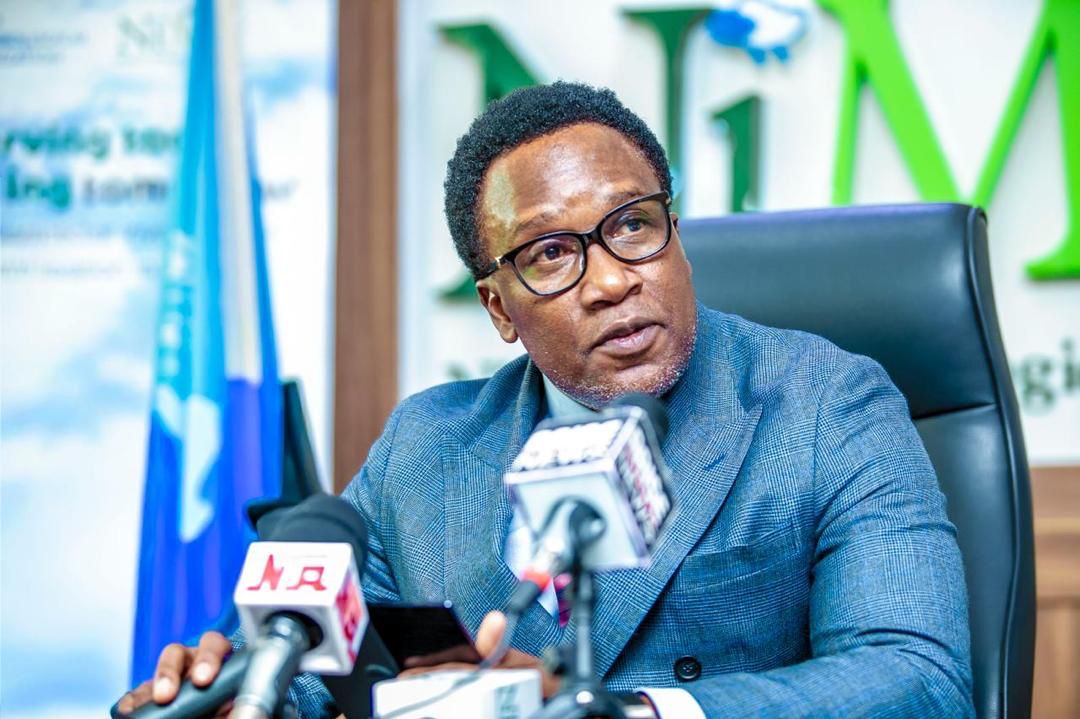

First Green White Resources Centre, FGWR, has described the ongoing transformation at the Nigerian Meteorological Agency as a major institutional rebirth driven by reforms, staff welfare improvements, digital innovation, and strategic climate initiatives under the leadership of its Director-General and Chief Executive Officer, Charles Anosike.
A statement signed by its founder and CEO, Mr Bonaventure Philip Melah titled, “Rebirth of Nigerian Meteorological Agency: Sustaining Climate Science For Action,” Melah wrote that “for the management of NiMet, the past two years and a few months have been marked by unprecedented achievements,” adding that workers are “counting the many bountiful harvests that are outcomes of the initiatives, policies, reforms and schemes” introduced under the current leadership.
According to him, one of the most significant milestones recorded by the management was the Federal Government’s approval of a new consolidated salary structure and revised conditions of service for NiMet workers, ending nearly 28 years without a review of the agency’s conditions of service.
The approvals, contained in a letter from the Office of the Secretary to the Government of the Federation to the National Salaries, Incomes and Wages Commission, take effect from June 1, 2026.
Melah noted that previous efforts by former managements to review workers’ conditions of service had failed due to bureaucratic bottlenecks, which he said left “the taste of ash in the mouth of the workers.”
He recalled that Anosike was appointed by President Bola Ahmed Tinubu in December 2023 and has since introduced reforms covering infrastructure upgrade, digitalisation of weather and climate forecasting operations, early warning systems, and ICT modernisation.
He added that NiMet has invested heavily in staff training and professional development “to ensure that operations comply with international best practices and at optimal standards.”
He further noted that NiMet has become a preferred destination for young professionals across Nigeria and West Africa seeking careers in meteorology through its training institutions in Lagos and Katsina.
The institutions, he said, operate in line with global standards, with programmes designed to strengthen global capacity to “observe, understand and predict weather, climate and water-related phenomena.”
Melah added that the institutions recently secured accreditation from the National Board for Technical Education, with plans underway to upgrade them into polytechnics and postgraduate diploma-awarding institutions.
He also highlighted Anosike’s recent recognition at the 2026 Educational Excellence Award ceremony held at the Federal University Oye-Ekiti, where he was praised for “turning meteorological science into learning, training, and capacity that reaches classrooms, universities, and young professionals across the country.”
Melah noted that NiMet has strengthened early warning systems to provide more accurate and timely forecasts, adding that these systems are now reaching farmers, local governments, and disaster managers “in real time, often through digital platforms and mobile networks.”
He further wrote that the agency has introduced AI-powered forecasting tools and digital climate advisory services, ensuring that “no community is left behind” through translation of forecasts into local languages.
According to him, these reforms were made possible through partnerships with universities, development agencies, and private sector players aimed at expanding weather stations and training climate scientists.
One of the most recent collaborations, he said, was the Memorandum of Understanding signed between NiMet and the Central Bank of Nigeria on climate and economic data sharing.
Speaking at the signing ceremony in Abuja, Anosike said: “Integrating weather and climate data into economic research is especially important in sectors such as agriculture, energy, and transportation,” adding that extreme weather events “can reduce agricultural productivity and threaten food security.”
He also linked the collaboration to the Renewed Hope Agenda of President Tinubu, which prioritises food security through agricultural investments and mechanised farming.
Citing global reports, Anosike warned that climate change was worsening food insecurity across Africa, noting that millions across the continent continue to face rising hunger due to extreme weather patterns.
In his remarks, Dr. Mohammed Sani Abdullahi of the CBN said the partnership marked an important step in strengthening “timely and reliable data” for economic policy decisions, adding that such information is critical for inflation monitoring and agricultural sector planning.
Beyond institutional reforms, Melah said the agency has introduced several welfare initiatives for workers, including payment of inherited 45-month minimum wage arrears covering 2019 to 2022, furniture allowances, staff transport services, improved training programmes, retirement honour ceremonies, and stronger engagement with labour unions.
He concluded that the reforms had repositioned NiMet as a key institution in Nigeria’s climate governance architecture, while also calling on workers to demonstrate greater commitment, noting that “to whom much is given, much more is expected.”