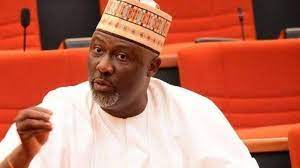

Former Dino Melaye, representing Kogi West, has attributed Nigeria’s chronic electricity challenges to governance failures rather than purely technical issues.
In a statement on X, Melaye highlighted that despite generating electricity since 1896, Nigeria continues to struggle with low power output and frequent outages. “Today, in March 2026, the national grid just dropped to 3,940 megawatts. For 220 million people,” he noted.
Comparing Nigeria with other African nations, Melaye pointed out stark disparities: South Africa produces over 48,000 megawatts for 60 million people, while Egypt has about 11,000 megawatts for 110 million. Nigeria, he said, has roughly 13,000 megawatts installed, yet only 4,000 to 5,000 megawatts are effectively transmitted on a good day.
He cited recurring grid failures and infrastructure challenges, revealing that the power grid collapsed 12 times in 2024 and 128 transmission towers were vandalized, costing the government N8.8 billion in repairs. According to Melaye, data from the Nigerian Electricity Regulatory Commission (NERC) shows at least 222 partial or total grid failures from 2010 to 2022—about one every three weeks. Restarting just three major plants—Azura, Delta, and Shiroro—after a collapse costs approximately $25 million each time.
Melaye also highlighted mounting debts and economic consequences, stating that as of February 2026, the power sector owed generation companies N6.8 trillion, growing by N200 billion monthly. He noted that power shortages have led to business closures, job losses, and billions spent on backup power. “In 2023, 767 manufacturing companies shut down. In the first half of 2025, manufacturers spent N676.6 billion on backup power, yet still couldn’t cover all their needs,” he said.
Citing the World Bank, Melaye added that power outages cost Nigeria around $29 billion annually, approximately 10% of the country’s GDP, underscoring the urgent need for effective governance reforms in the electricity sector.
Like this:
Like Loading…