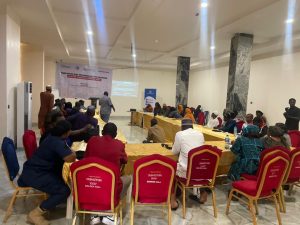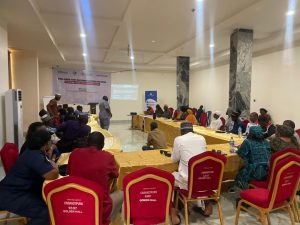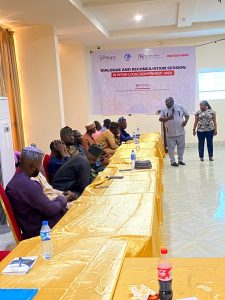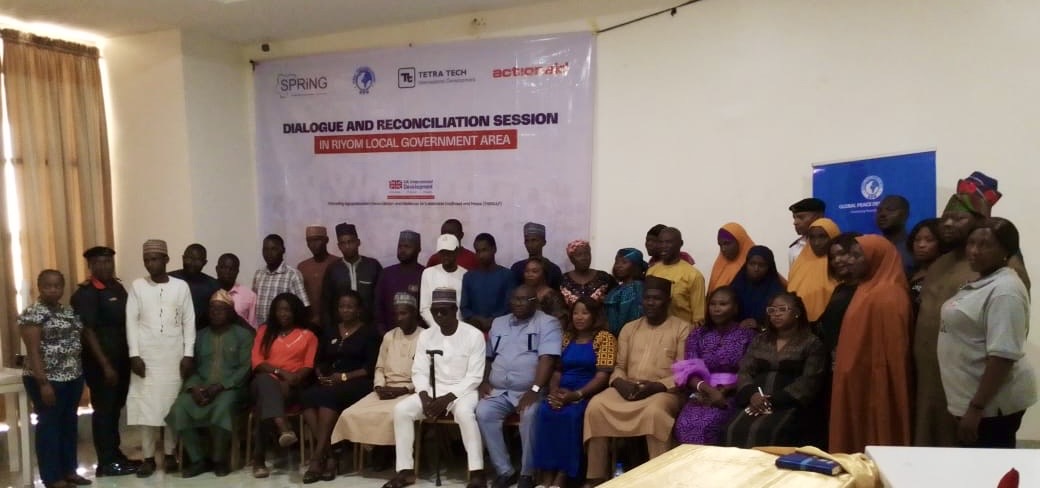
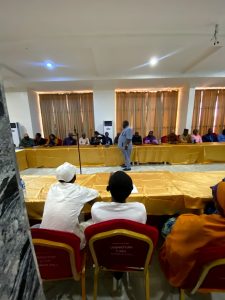
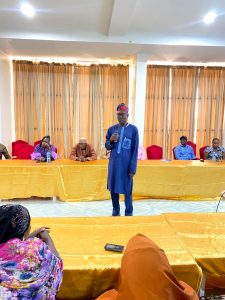
On March 10, 2026, representatives of farmers and herders in Riyom Local Government Area of Plateau State gathered for a Joint Dialogue and Reconciliation Session aimed at addressing long-standing tensions between the two groups. The meeting, held at Crispan Hotel, brought together traditional rulers, community leaders, security agencies, and local government officials to find practical solutions for peaceful coexistence.
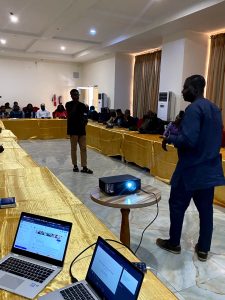
The dialogue was convened by Global Peace Development in collaboration with ActionAid, Tetra Tech International Development, Search for Common Ground, and the SPRING Programme. The initiative is part of the Promoting Agro-Pastoralism Reconciliation and Resilience for Sustainable Livelihood and Peace (PARSLP) project supported by UK International Development, which focuses on strengthening dialogue and building resilience among farming and pastoral communities.

Recognizing the Impact of Conflict
During the session, participants acknowledged the devastating impact farmer–herder conflicts have had on communities across Riyom Local Government Area. Years of disputes have resulted in loss of lives, destruction of property, declining agricultural productivity, and weakened relationships among communities.
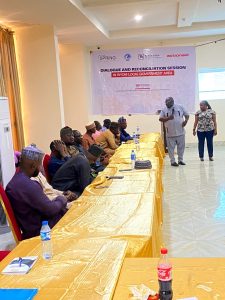
In response, both groups agreed to a Peace Pact that commits them to preventing violence and resolving disputes through dialogue and lawful channels.
Issues Identified by Both Communities
Through open discussions, farmers and herders identified several challenges that continue to fuel tensions in the area:
- Encroachment on cattle routes by farmers in some communities
- Destruction of crops and encroachment on farmlands by herders
- Child grazing practices
- Night grazing, particularly by transhumant herders
- Insufficient water points and resting areas for livestock
- Lack of adequate forest guards to monitor ungoverned forests
- Absence of grazing reserves
- Land grabbing and displacement affecting both farmers and herders
- Cases of sexual violence within communities
- Disrespect toward traditional institutions
- Displacement of farmers and pastoralists due to conflict
Participants noted that while these issues may not occur in every community, they collectively contribute to mistrust and recurring clashes.
Pathways to Sustainable Peace
Following extensive dialogue, stakeholders agreed on several steps to promote lasting peace.
Mutual Respect for Livelihoods
Farmers committed to respecting designated grazing routes and avoiding deliberate obstruction. Herders pledged to prevent night grazing, child grazing, and cattle intrusion on cultivated farmlands, while also taking responsibility for damages caused by their livestock.
Early Reporting and Peaceful Dispute Resolution
Both parties agreed to report disputes promptly to traditional leaders, Ardos, ward heads, community peace committees, or the Nigeria Security and Civil Defence Corps. Retaliation and violence were strongly rejected.
Strengthening Community Peace Structures
Participants agreed to strengthen local conflict resolution mechanisms and hold regular joint meetings at ward and community levels to address emerging issues before they escalate.
Compliance with Local Laws and Agreements
Both groups committed to respecting local agreements, stock route arrangements, and applicable laws, while cooperating with authorities to ensure accountability.
Promoting Accurate Information
To prevent escalation, participants emphasized discouraging rumors and misinformation that could incite violence. Open communication between farmers and herders was encouraged to build trust.
All parties condemned cattle rustling, farm destruction, intimidation, and jungle justice. Plans were also discussed to establish a joint task force to support reporting mechanisms and strengthen peace efforts.
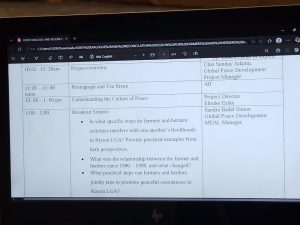
The session also featured breakout discussions where farmers, herders, and community leaders engaged in smaller group conversations. These sessions created space for deeper dialogue, allowing participants to share experiences, clarify misunderstandings, and propose community-driven solutions.
By signing the preliminary Peace Pact, representatives of both farmers and herders reaffirmed their commitment to peaceful coexistence in Riyom Local Government Area. They pledged to serve as ambassadors of peace within their communities and uphold the agreement for the benefit of present and future generations.
The dialogue marks an important step toward rebuilding trust and strengthening cooperation among communities in Plateau State. While the journey toward lasting peace will require continued collaboration, the agreement offers hope for stability and shared prosperity.