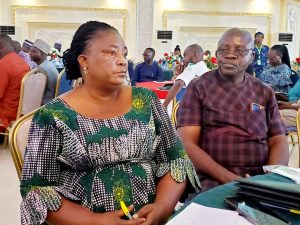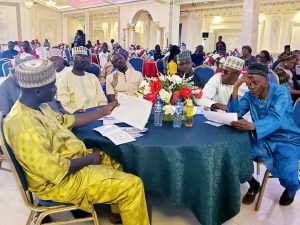
The Plateau State Internal Revenue Service (PSIRS) has successfully concluded a two-day stakeholders’ engagement aimed at deepening public understanding of the 2025 Nigeria Tax Reform Act. The event was held at the Usiju World Event Centre in Jos.
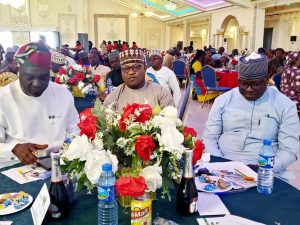
The engagement brought together stakeholders from ministries, departments, agencies, business owners, the informal sector, and civil society organizations. Its purpose was to clarify key aspects of the new tax reforms and their implications for efficient tax administration in Plateau State.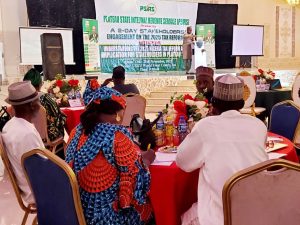
In his welcome remarks, the Secretary to the Government, Arc. Samuel Nanchang Jatau—represented by PSIRS Chairman, Dr. Jim Pam Wayas stated that the 2025 Tax Reform Act affects every citizen and will take effect from January 1. He emphasized that the bill is not punitive but introduces a unified fiscal framework that enhances autonomy for revenue services across all levels of government. He encouraged participants to ask questions and clear misconceptions before full implementation begins.
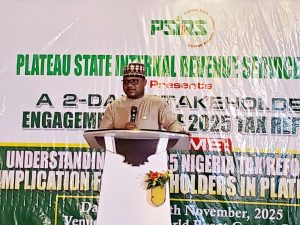
The Executive Chairman of PSIRS, Dr. Jim Pam Wayas, provided an overview of the Act, noting that it consolidates multiple tax laws into a single structure. He highlighted major updates affecting individuals and businesses, including revisions to personal income tax, VAT, capital gains tax, and minimum tax regulations. Small businesses now benefit from a higher zero-rate threshold, while capital gains tax will be applied at effective rates between 10% and 25%. He added that financial institutions are now required to report collective income directly to revenue services to simplify compliance.
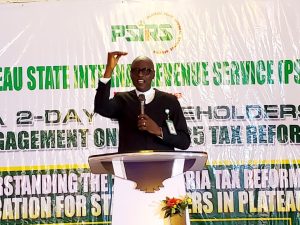
Speaking on the implications for compliance, Plateau State Commissioner of Justice, Hon. Philemon Daffi Esq., urged stakeholders to adhere to the new tax guidelines. He reassured attendees that revenue collected would be used effectively and called on informal sector participants to support the compliance drive, noting that enforcement would be firm when necessary.
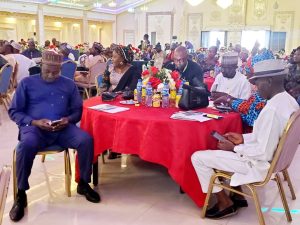
Mr. Jonathan Mangai, Director of Planning, Research, and Statistics at PSIRS, stressed the importance of a fair and transparent tax system. He highlighted the need for integrity, efficient digital processes, and stronger connections between tax payments and public services.
The event featured a robust panel session with Dr. Jim Pam Wayas, Mrs. Rahila Olu-Silas Esq., Assoc. Prof. Dagwom Dang, Mr. Monday Bereh, and Dr. Lukman Jimoh Rahim, moderated by Mr. Wulashik Dafaan and MC Tsok. Discussions centered on the new tax law and implementation challenges. Panelists emphasized fair tax coverage across sectors, improved compliance strategies, and greater transparency to build public trust.
Addressing the informal sector, Dr. Lukman Jimoh Rahim clarified that all income—including cryptocurrency gains—is taxable. He explained the tax bands, noting that the first ₦800,000 for registered businesses is tax-free, with higher earnings taxed progressively. He encouraged attendees to use their newly gained knowledge to educate others and pointed them to a pocket-friendly tax guide and online support portal.
Hon. Cornelius Doeyok, Commissioner for Tourism, Culture, and Hospitality, underscored the need for continuous public engagement to enhance understanding and acceptance of the new tax law. He highlighted plans to leverage tourism, hospitality, and e-commerce as additional revenue sources for the state.
In her closing remarks, Mrs. Deborah Adamu Kesuwo, Chairperson of the stakeholders’ engagement team, expressed gratitude to all participants and commended the resource persons for their valuable insights. She also praised Dr. Wayas and his team for their efforts toward fostering transparency and efficiency in Plateau State’s tax administration.
Mrs. Emily Ufulul Daboer, also delivering a vote of thanks, appreciated stakeholders, taxpayers, professional partners, and the media for their dedication to understanding the Nigerian tax system and supporting PSIRS initiatives.