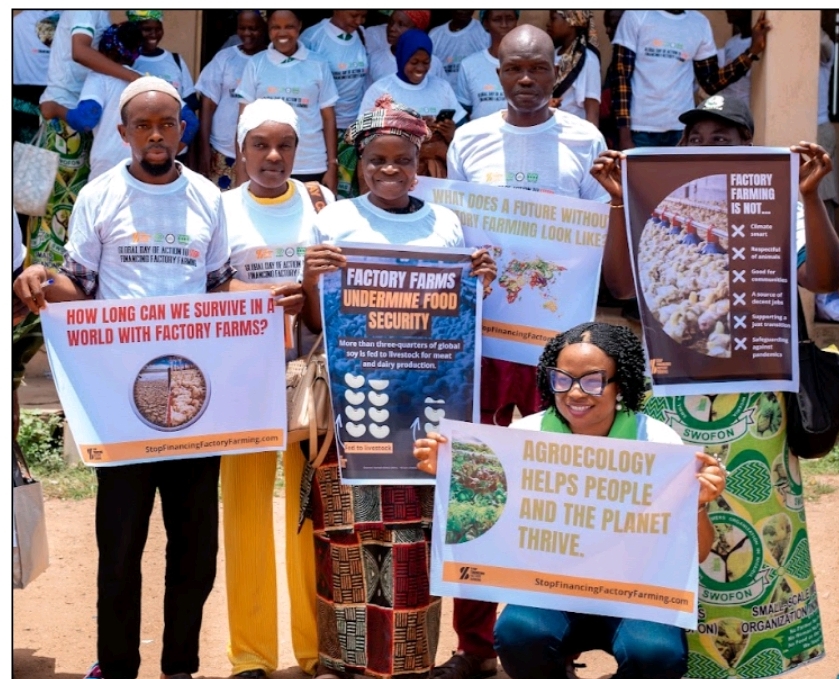

A coalition of civil society organisations has urged the African Development Bank Group to invest in agroecological and climate resilient farming approaches rather than financing industrial livestock models that drive land conversion and degrades the ecosystem
They called for the prioritization of support for small holder farmers, pastoralists, women producers and indigenous and local communities.
The call comes as leaders gather in the Republic of Congo for the 2026 African Development Bank Annual Meetings.
The organisations under the Stop Financing Factory Farming Coalition, in a statement made available to newsmen on Thursday, harped on the need for greater transparency and accountability on finances shaping the food systems across Africa,
stressing that decisions reached at the meeting would shape African agriculture, land use and economies for decades.DAILY POST reports that AFDB’s flagship Feed Africa Strategy estimated that transforming African agriculture would require between US$315 billion and US$400 billion in investment over ten years. The Bank has committed US$24 billion to catalyze additional public and private investment through large scale value chain development, agro-industrialization and blended-finance mechanisms.
However, the coalition warned that without stronger safeguards, transparency and participation from affected communities, the financing could reinforce unsustainable and extractive food system models that would strain land, water, biodiversity, and rural livelihoods across the continent.
The statement reads, “As leaders gather in Brazzaville for the African Development Bank Annual Meetings 2026, civil society organizations under the Stop Financing Factory Farming coalition are calling for greater transparency and accountability around how development finance is shaping the future of food systems across Africa.
“The urgency is growing as Africa simultaneously faces escalating climate shocks, water stress, debt pressures, biodiversity decline, and food insecurity. As development finance institutions deepen their engagement in agriculture, transparency and accountability are essential. The question is not only how much finance is mobilised, but what kind of food systems that finance is designed to support.
“Civil society organisations are calling on the African Development Bank Group to: stop financing industrial livestock production models that contribute to environmentally destructive land conversion, unsustainable water use, and ecosystem degradation; prioritise support for smallholder farmers, pastoralists, women producers, and Indigenous and local communities.
“Invest in agroecological and climate-resilient farming approaches; improve transparency and accountability around agricultural lending portfolios and value chain investments.
“Agricultural finance must therefore be designed to scale food systems that strengthen food sovereignty, climate resilience, biodiversity, and community wellbeing while supporting locally rooted and sustainable food systems.”
According to Opeyemi Elujulo, the Campaign Coordinator of Stop Financing Factory Farming Coalition, the organisations are advocating for financing approaches that support equitable, climate resilient and community led food systems.
He maintained that the decision made will influence whether Africa’s food future is centred on resilient local food systems, biodiversity protection, sustainable water use, and community wellbeing, or increasingly concentrated industrial models that deepen environmental and economic vulnerabilities.